
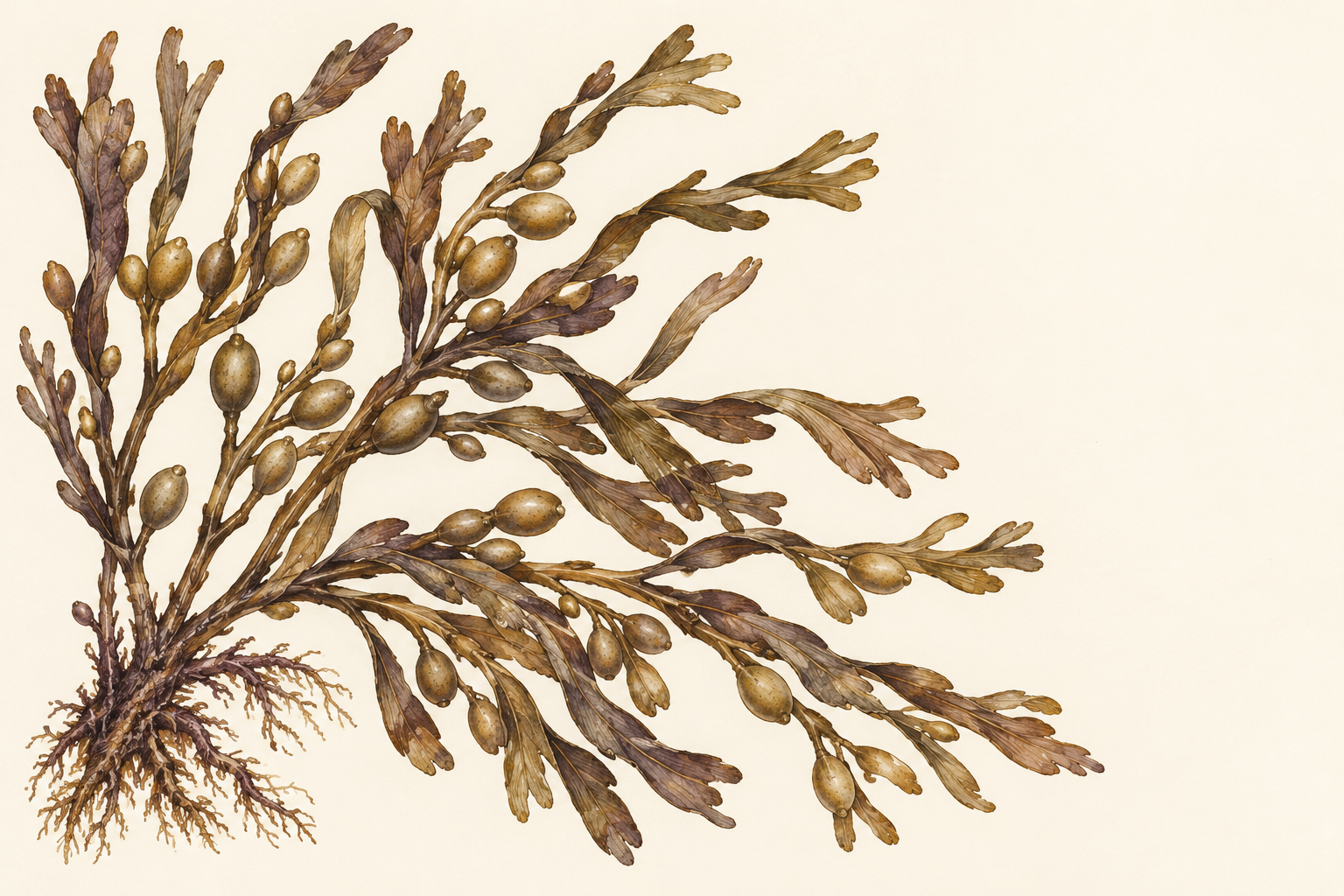
Same seaweed name. Different extracts.
A seaweed extract is a processed material. The starting biomass and the way it is processed influence its composition. Naming the species does not tell you everything that ends up in the bottle.
- 01 / SourceWhich seaweed? Which material?
- 02 / ProcessHow was the extract made?
- 03 / CompositionWhat was recovered, and at what concentration?
- 04 / ApplicationWhich crop, dose and conditions were studied?
What the research actually tested.
Carmody and colleagues compared differently processed Ascophyllum nodosum extracts in tomato plants exposed to heat stress during flowering and fruit set. The study examined physiological responses and reproductive performance. Processing mattered to the response.
That is evidence about the tested extracts and conditions. It is not a cannabis trial, a test of ÉLAN or proof that every seaweed extract performs alike.
So what should a grower ask?
What is the material? Ask for the species and a clear ingredient description.
How was it made? “Cold-pressed” or “extracted” needs a documented process behind it.
What is in this dose? Compare composition and application rate, not just bottle size.
What supports the benefit? Look for the crop, conditions and actual material tested.
Where Crazy Hills fits.
Our ingredient notebook is here to explain the questions behind a formulation. ÉLAN combines complementary bio-inputs; SPARK combines seaweed with mineral nutrition. Their product pages explain the different uses. An ingredient story does not replace the finished product’s instructions.
Go to the source.
Carmody et al. (2020): seaweed processing and tomato heat stressReviewed 8 October 2026 · General growing and ingredient research.
How we separate research, measurements and product guidance